


Brett Lamb Of The Discovery Experts On Pushing the Boundaries of AI
Artificial Intelligence is transforming industries at a breakneck pace, and the entrepreneurs driving this innovation are at the forefront of this revolution. From groundbreaking applications to ethical considerations, these visionaries are shaping the future of AI. What does it take to innovate in such a rapidly evolving field, and how are these entrepreneurs using AI to solve real-world problems?
As a part of this series, we had the pleasure to interview Brett Lamb.
Brett Lamb is the Co-Founder and CEO of The Discovery Experts, a Dallas-based eDiscovery firm that has grown almost 1000% in four years after launching as a two-person, fully remote startup at the height of COVID. A former trial lawyer and general counsel for an ENR Top 100 company, Brett built his start up around the belief that deep industry specialization delivers better results than a jack-of-all-trades approach. In less than six years, his company’s success and popular demand have allowed him to expand services for multiple industries, including construction, energy and commercial litigation.
Thank you so much for joining us in this interview series. Before we dive in, our readers would love to learn a bit more about you. Can you tell us a bit about your childhood backstory and how you grew up?
I’m from a small town in Colorado where I grew up on a farm with a lot of pets, including a goat. Going from the farm to building my own start-up in legal technology has certainly been a ride.
I went to the University of Colorado and started work in hospitality, managing bars, restaurants and nightclubs. It was a fun season, but somewhere along the way, my uncle encouraged me to go to law school. From then on, my journey was tied to the legal industry.
Can you share the most interesting story that happened to you since you began your career?
I went from hospitality to trial lawyer — where I represented clients ranging from famous individuals to large multinational corporations — to corporate counsel to CEO. Reinventing my career has been interesting, to say the least.
One moment I remember well, I got to work on a large commercial litigation case while I was in law school. Back then, we were experimenting with the very earliest form of eDiscovery, which is the process of reviewing millions of electronic documents during a court case. In eDiscovery, we often say you’re looking for the “golden ticket,” which is that one piece of evidence that will win a case. Thirty years ago, we used humans to manually filter or scan documents so we could run searches. Today, all of this is done using technology, including artificial intelligence.
From my first exposure to eDiscovery, I was fascinated by the volume and accuracy that technology could balance. I also learned about the jargon of the construction industry. It’s truly another language. That planted the first seed in my head that would later lead to my start up, which was designed specifically to use eDiscovery in construction litigation.
None of us are able to achieve success without some help along the way. Is there a particular person who you are grateful towards who helped get you to where you are? Can you share a story about that?
My uncle, Spike Pattillo, who suggested I try law school. He’s always been a great mentor to me. My uncle was a trial lawyer, and later mediator, in Waco, Texas. He has always been a source of sage advice as I navigate life.
But my grandmother, Johnny Lamb, was the most inspirational person I have ever met. She was extremely intelligent, strong and also genuinely compassionate toward others. She went to business school at a time when that meant learning shorthand and typing for women. She owned her own company, served her family, led Bible studies, and positively impacted so many she came in contact with.
Can you please give us your favorite “Life Lesson Quote”? Can you share how that was relevant to you in your life?
Charles Swindoll said, “We are all faced with a series of great opportunities brilliantly disguised as impossible situations.” Ain’t that the truth.
But more than anything, I’ve based my life and my company on Christ’s servant leadership example and with faith that “In all things God works for the good of those who love him, who have been called according to His purpose.” (Romans 8:28) I may be a CEO advocating for the evolution of AI, but that doesn’t exclude me from using my company to bless the life of others. In fact, that enables me to make an impact on the lives of others.
I also think there’s a quote that says, “Do not let perfect be the enemy of good.” I don’t know who said it, but that rings true.
You are a successful business leader. Which three character traits do you think were most instrumental to your success? Can you please share a story or example for each?
At The Discovery Experts, we incorporate character traits into our internal values, which we call our “Superhero Credo.” We’re very big superhero fans here. Three examples from that credo:
One, we are accountable. At The Discovery Experts, we have an All-Team “Tactical” meeting twice a week where every team member gets a chance to ask for help, share a “Story of Service,” or give a shout-out to a fellow team member(s).
Two, we keep it real. Many organizations shy away from conflict, but The Discovery Experts embraces healthy conflict to strengthen our relationships. We have a “Healthy Conflict Counter” in our office so we can reach quarterly conflict goals and related incentive rewards.
And three, we are curious. It’s difficult to succeed in the technology or legal field if you aren’t curious. The Discovery Experts has a culture where we readily admit our mistakes and seek out how to improve. There’s no room for shaming anyone; it’s all about learning.
Ok super. Let’s now shift to the main part of our discussion. Share the story of what inspired you to start working with AI. Was there a particular problem or opportunity that motivated you?
Definitely. I was in-house counsel at an ENR Top Construction company that famously “hated” eDiscovery. Unfortunately for them, eDiscovery is an unavoidable part of litigation. But my in-house legal team was frustrated — and so was I, to be honest — by the eDiscovery firm’s lack of familiarity with construction jargon. My team spent so much time and energy translating, it felt wasteful and redundant by the time the eDiscovery bill came to our desk. There was this disconnect between teams that we just couldn’t bridge.
So, I turned my frustration into a solution. I co-founded an eDiscovery firm with a mission to improve what so many vendors get wrong — namely, delivering the client service needed. The Discovery Experts strives to build relationships rather than transactions. We’re experts in the niche fields of our clients, so they don’t have to spend precious time, energy, and dollars explaining things to us. We offer what we call “concierge service” while watching our clients’ dollars. And AI helps us leverage and enhance our skills to get clients wins while saving them money. Every year, more and more electronic data is stored for construction projects, making AI for eDiscovery a no-brainer. AI doesn’t need coffee or to take care of 3 kids. AI is a key part of making eDiscovery less painful, confusing and expensive — which is what The Discovery Experts is all about.
Get Authority Magazine Editorial Staff’s stories in your inbox
Join Medium for free to get updates from this writer.
Subscribe
Remember me for faster sign in
Can you describe a moment when AI achieved something you once thought impossible. What was the breakthrough, and how did it impact your approach going forward?
The way we use AI in eDiscovery is groundbreaking. It has allowed us to cut the length of eDiscovery processes down to a fraction of what it used to be. For our clients, that means lower costs and better, faster results. For us, that means skilled AI experts and happy clients. For example, we recently completed a case where we saved a client $330,000 by fine-tuning an AI tool to search millions of emails, attachments and correspondence to find specific search terms. This is what a symbiotic relationship between AI and human experts looks like. The experts have a vision of the results they want, and we create and fine-tune AI to help us achieve that vision.
Please talk about a challenge you faced when working with AI. How did you overcome it, and what was the outcome?
When I was practicing law, I found it difficult to choose AI vendors I really trusted. By nature, a lawyer’s job is to question. I always had accuracy, efficiency and privacy top of mind, and like most people I was optimistically cautious about what AI was capable of. Was our information truly protected? Were the results accurate? Was the vendor efficient with their use of it?
Ironically, one of the best eDiscovery vendors I ever worked with was led by Lauren Abeyta, who later became my Co-Founder of The Discovery Experts. I experienced how familiar she was with technology, how willing she was to push AI while maintaining ethical standards, and I thought she was a fantastic example of what someone could do with AI in the legal technology field.
Can you share an example of how your work with AI has had a meaningful impact (on others, on business results, etc)? What was the situation, and what difference did it make?
We have always employed first generation AI, which some also refer to as machine learning. This has been a powerful to harness human knowledge of certain documents to find other, similar documents from large datasets. These are needles in a haystack, so to speak.
Now, we have developed workflows that continue to use machine learning while harnessing generative AI, instead of human knowledge to find seed documents. This played out recently on a project that had been in litigation so long that most, if not all, of the key project personnel no longer worked for our client. Generative AI allowed our client’s outside lawyers to answer questions such as “What did certain persons have to do with this project?” And “What caused the alleged delays?” The generative AI tool’s answers, along with the documents the tool relied upon, provided a source for the machine learning to locate all the relevant documents saving millions of dollars in attorney review time.
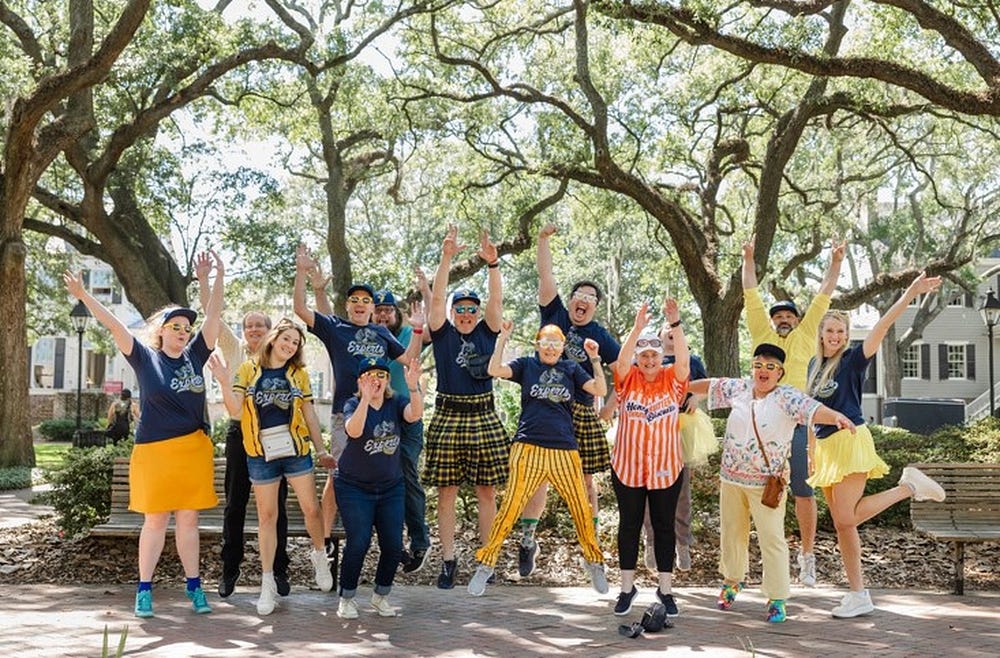
Here is the main question for our discussion. Based on your experience and success, can you please share “Five Things You Need To Know To Help Shape The Future of AI”?
1. We’re already comfortable with AI.
We use it every day, mostly without realizing it. When you get a recommendation on your Spotify playlist, when Amazon suggests a re-order, when Apple asks if you want to go “home.” That’s all AI.
2. AI won’t replace our jobs, but people who know how to use AI will be very valuable.
The Discovery Experts recently hosted a Webinar for Paralegals on this topic. There’s a lot of fear about AI replacing jobs in the legal industry, but I think it’s misplaced. AI will make our jobs more efficient, and those who know how to wield its full potential will be very valuable.
3. AI is not a silver bullet.
4. Trust AI with verification.
Blindly trusting what AI puts out is not a wise strategy. But neither is continuing to distrust it after significant time and resources have been poured into it. Take AI hallucinations, for example. These fabricated, incorrect responses generated by AI present an opportunity to fact check and put AI outputs to the test. But they also present an opportunity to fine-tune prompt engineering, data input, and filtering tools.
5. Data is only going to grow, so get prepared now.
As technology expands and quickens, more data will be crossing ethernet, internet, phone messages, web traffic, and anywhere that allows for technology. Every day, we have more data at our fingertips and in our storage than the day before. For legal technology, data sets will continue to grow, and eDiscovery will have to wade through more and more. Let’s make sure AI keeps up with that growth.
When you think about the future of AI, what excites you the most, and how do you see your work contributing to that future?
Notoriously, eDiscovery is characterized as “painful, expensive and confusing.” The Discovery Experts wants to alleviate the problem all of the legal industry faces, and we’re using AI as a guide to make unavoidable processes more efficient.
What advice would you give to other entrepreneurs who want to innovate in AI? Can you share a story from your experience that illustrates your advice?
I’ve based my entrepreneurship in part on the book “The Good Entrepreneur” by Nick Kennedy. A prevalent theme in this book is living out your values constantly. At The Discovery Experts, we are all about relationships, not transactions. While one might not necessarily see AI as a relational tool, we see it as an amazing way to save our clients time and money while still helping them locate the documents needed to prevail. Some companies see this relational approach as counterintuitive because their primary goal is to maximize profit. The Discovery Experts, however, prioritizes the relationship first knowing profits will follow through long term trust.
Is there a person in the world, or in the US with whom you would like to have a private breakfast or lunch, and why? He or she might just see this, especially if we tag them. :-)
I would love to sit down with Dr. John Townsend, a prolific leader, author and coach who has inspired me to look past spreadsheets towards the people behind the business in order to chart success. But also, Brene Brown has inspired me to embrace vulnerability in my leadership. I also think she is absolutely hilarious, so we’d be laughing the entire meeting.
How can our readers further follow your work online?
I’m on LinkedIn. And I’d love for people to check out thediscoveryexperts.com. Follow along on our journey using AI to change the legal technology world. Reach out if you want to be part of it.
Thank you so much for joining us. This was very inspirational, and we wish you continued success in your important work.


